Human First 911 People Then Protocol
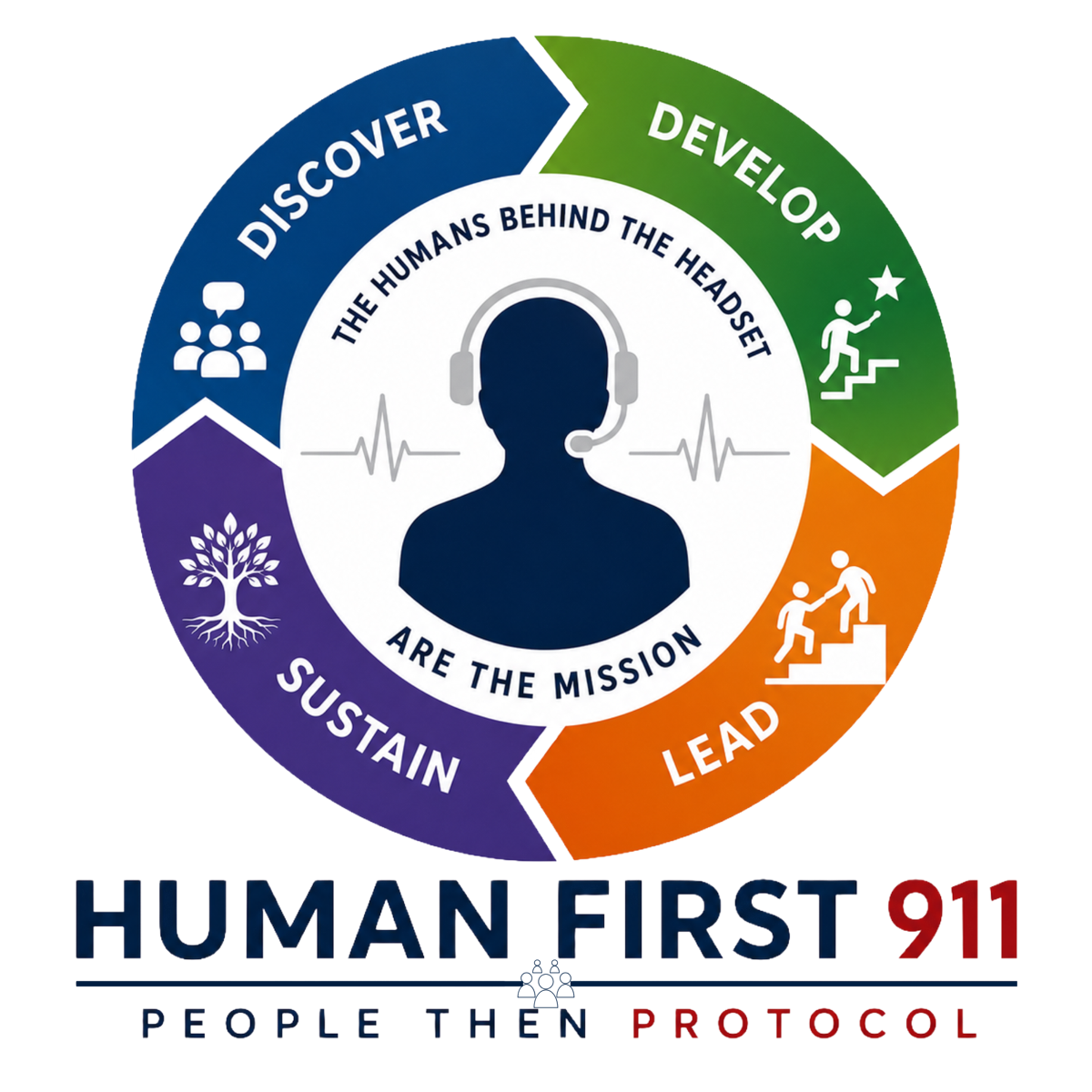
The humansbehind the headsetare the mission.
Human-first organizations build better Emergency Communications Centers.
From recruitment to retirement, a framework for building sustainable, human-first Emergency Communications Centers.
Why Human First 911 exists
Every call begins with a person. So should every organization.
Emergency Communications Centers are built around technology, policy, training, standards, and performance. Each is essential. Yet none can answer a call, steady a team, or carry the mission forward without people.
The pressures facing the profession rarely exist in isolation. Recruitment affects workload. Workload affects development. Leadership shapes belonging. Culture influences whether experienced professionals stay. Treating each challenge separately can obscure the system connecting them.
Human First 911 begins with that connection. It offers a way to see the entire workforce journey—and to design organizations where people and operational excellence strengthen one another.
FOUNDATIONAL BELIEF
Human First 911 is founded on a simple belief: when we intentionally invest in the people behind the headset with the same purpose and discipline that we invest in technology, policies, and procedures, we build Emergency Communications Centers that are stronger, healthier, and better prepared for whatever comes next.
The four workforce domains
One career journey.
Four connected commitments.
Human First 911 is organized around four interconnected workforce domains that collectively support the entire Public Safety Telecommunicator career journey, from recruitment to retirement. Each domain contains practical resources, leadership considerations, implementation guidance, and tools designed for both frontline professionals and organizational leaders.
Select a domain to preview its focus, principles, and practical resources.
01 Discover Create authentic pathways into the profession through thoughtful recruitment, hiring, onboarding, and belonging.
01 Discover
Area of Focus
How organizations attract, select, welcome, and prepare people for a career in emergency communications.
Principles
- Voice
- Purpose
Inside This Domain
- Recruitment
- Helping agencies communicate the reality, value, and expectations of the profession to potential applicants.
- Candidate Experience
- Examining how applicants experience the organization from first contact through selection.
- Interviewing and Selection
- Supporting fair, intentional processes that identify both capability and organizational fit.
- Onboarding
- Building a structured introduction that prepares new employees to understand the work and the culture.
- Organizational Readiness
- Ensuring the agency is prepared to support the people it is working to recruit.
For Frontline Professionals
Understand the profession, the organization, and the expectations of the career from the beginning.
For Leaders
Build recruitment and onboarding systems that attract the right people and create a credible foundation for retention.
02 Develop Build skill, confidence, purpose, and clarity through learning that continues beyond initial training.
02 Develop
Area of Focus
How organizations help Public Safety Telecommunicators build competence, confidence, connection, and meaningful careers.
Principles
- Belonging
- Clarity
Inside This Domain
- Training
- Creating intentional learning experiences that prepare people to perform the work successfully.
- Coaching and Feedback
- Providing clear, useful guidance that supports growth rather than merely identifying mistakes.
- Career Development
- Helping employees understand how they can continue learning, contributing, and advancing.
- Mentoring
- Connecting people with trusted support, perspective, and institutional knowledge.
- Performance Expectations
- Making standards, responsibilities, and measures of success understandable and consistent.
For Frontline Professionals
Gain clearer expectations, stronger support, and meaningful opportunities to grow throughout the career.
For Leaders
Create development systems that improve performance while helping employees build confidence, capability, and commitment.
03 Lead Practice stewardship through clear expectations, recognition, trust, and intentional culture.
03 Lead
Area of Focus
How leadership decisions, relationships, communication, and workplace practices shape the everyday employee experience.
Principles
- Flexibility
- Stewardship
Inside This Domain
- Human-Centered Leadership
- Leading with an understanding that operational decisions affect real people.
- Communication
- Sharing information clearly, consistently, honestly, and with appropriate context.
- Decision-Making
- Balancing mission requirements with the long-term needs of the workforce.
- Accountability
- Establishing fair expectations while preserving dignity, trust, and opportunities for improvement.
- Workplace Adaptability
- Responding thoughtfully to changing people, conditions, and organizational needs.
For Frontline Professionals
Experience leadership that communicates clearly, applies expectations fairly, and recognizes the realities of the work.
For Leaders
Use practical leadership approaches that strengthen trust, accountability, adaptability, and organizational performance.
04 Sustain Support lasting pride, adaptability, resilience, and connection throughout a full career.
04 Sustain
Area of Focus
How organizations create the conditions that help people remain engaged, supported, recognized, and able to build sustainable careers.
Principles
- Pride
- Recognition
Inside This Domain
- Retention
- Understanding why people stay, why they leave, and what organizations can influence.
- Recognition
- Ensuring meaningful contributions are seen, acknowledged, and valued.
- Workplace Sustainability
- Examining staffing, workload, recovery, support, and the long-term experience of the workforce.
- Engagement
- Creating opportunities for employees to contribute ideas, influence improvement, and remain connected to the mission.
- Career Continuity
- Supporting employees through changing roles, career stages, transitions, and eventual retirement.
For Frontline Professionals
Find greater connection, recognition, and support throughout the full career journey.
For Leaders
Build workplace conditions that strengthen engagement, reduce preventable turnover, and support long-term organizational stability.
DiscoverDevelopLeadSustain
What makes Human First 911 different
Not another isolated initiative.
Human First 911 is an organizational development framework—a way to understand how workforce decisions connect across an entire career.
It does not replace the work agencies are already doing.
It helps them see how that work fits together.
A living framework
Built to grow with the profession.
Human First 911 is beginning as a shared structure—and will continue evolving into a practical library for leaders, teams, and agencies ready to put people at the center of organizational decisions.
Implementation guides
Coming soonLeadership considerations
Coming soonAssessments & reflection tools
Coming soonDownloadable resources
Coming soonOrganizational best practices
Coming soonPractical quick wins
Coming soonAbout the founder
A framework shaped by the work—and by the people doing it.
Will Young created Human First 911 from a belief that Emergency Communications Centers can pursue operational excellence without losing sight of the people who make it possible. He brings experience as a Public Safety Telecommunicator, trainer, leader, and educator, following an earlier career as a classroom educator.
Throughout his career, Will has held a persistent belief that every organization, process, and leader can improve through intentional, incremental refinement. His experience in the APCO Registered Public-Safety Leader Program and his perspective as a neurodivergent professional helped reveal connections that traditional approaches can overlook.
Human First 911 is a natural extension of that philosophy. Rather than prescribing a one-time initiative, it encourages agencies to treat organizational development as an ongoing commitment: examining the full workforce journey, asking better questions, and continually investing in people.
The principle remains simple: People Then Protocol.
Project updates
Follow the journey.
Human First 911 is continuing to evolve. Updates will share new resources, practical tools, and framework content as they become available.
Updates are coming soon